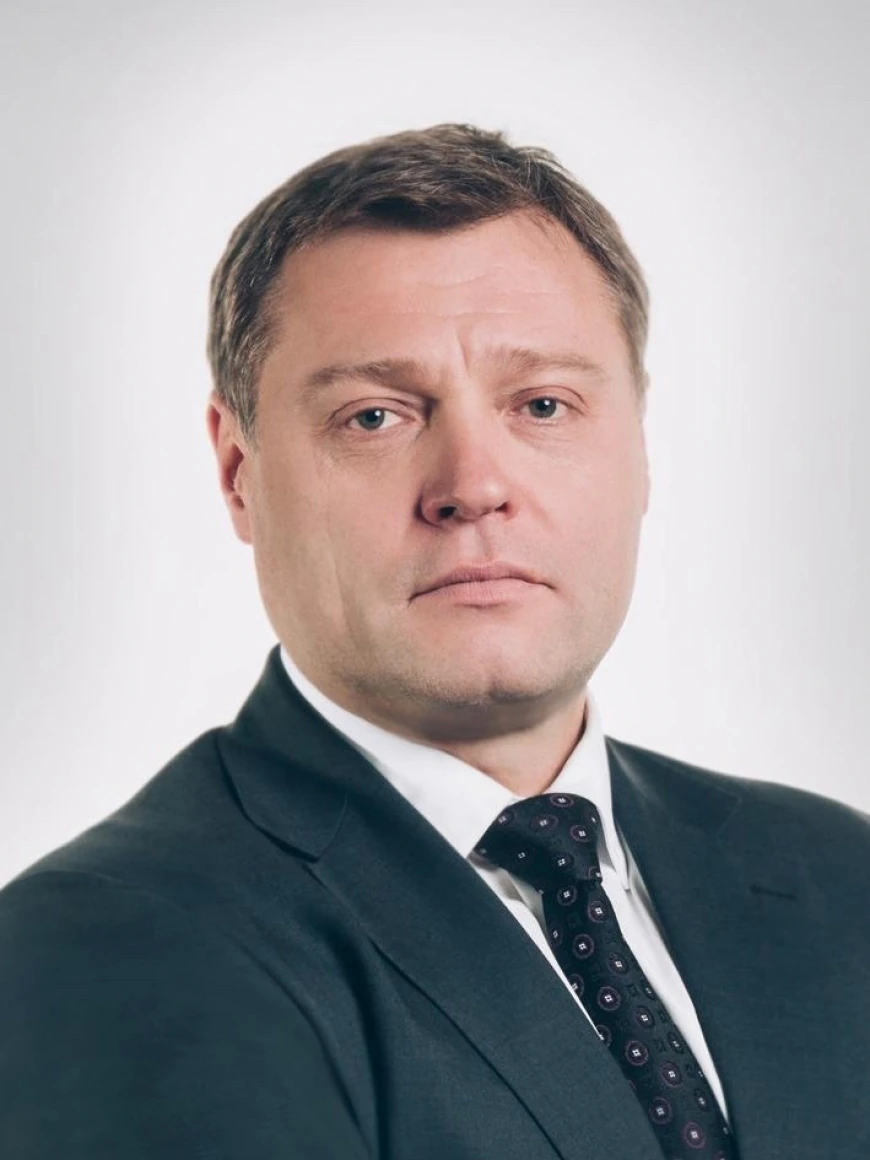
If you stumbled here looking for someone else by that name, a good disambiguation test is simple: the Igor Babuschkin with a meaningful public wealth profile is the one whose personal domain is babuschkin. de / babuschk. in, who lists himself as founder of Babuschkin Ventures, and who was named in major tech press as a co-founder of xAI in 2023. That is the person this article covers.
Career timeline and how he built wealth

Igor Babuschkin is a deep-learning researcher whose career moved through some of the most influential AI labs in the world before landing him at the center of one of tech's highest-profile startups. His pre-xAI background includes research roles at DeepMind and OpenAI, two organizations that paid competitive research salaries and, in some cases, granted equity or bonuses tied to commercial performance. Senior AI researchers at DeepMind and OpenAI during the early-to-mid 2020s were routinely compensated in the $300,000 to $1 million-plus total-comp range, though exact figures for Babuschkin's tenure there are not public.
The most important financial event in his career is his role as a co-founder of xAI. Forbes reported in April 2023 that Elon Musk had formed xAI in Nevada and that Babuschkin was among the key hires and co-founders recruited to the venture. Wikipedia's xAI entry identifies him specifically as the company's chief engineer at launch. Co-founder equity at a startup backed by Elon Musk, which raised billions in funding and was valued at approximately $50 billion by late 2024, is the single largest likely driver of Babuschkin's estimated wealth. Even a fraction-of-a-percent equity stake at that valuation would produce paper wealth in the tens of millions of dollars.
More recently, Babuschkin announced his departure from xAI. Reuters, TechCrunch, and CNBC all confirmed that he stated 'Today was my last day at xAI' and that he is now launching Babuschkin Ventures, a firm focused on AI safety research and startups. His personal site at babuschk.in already carries Babuschkin Ventures branding, and an investment inquiries email ([email protected]) is listed publicly. Moving from co-founder to venture capitalist is a common wealth-consolidation move: you monetize or retain equity from the prior company while deploying capital in the next chapter.
How net worth gets estimated when nothing is officially disclosed
Babuschkin has not published his net worth, and no court filings, SEC disclosures, or public ownership records appear to have surfaced for him as of April 2026. So any estimate, including this one, is built from inference rather than confirmed documents. Here is the logic chain researchers typically use in situations like this:
- Identify the company's last known valuation from funding rounds or secondary market reporting.
- Estimate a plausible equity range for someone with a co-founder and chief engineer title at a startup of that stage.
- Apply a discount for vesting schedules, dilution from later funding rounds, and the gap between paper value and liquid cash.
- Add known or estimated cash compensation from prior roles (senior researcher salaries at top AI labs are well-documented in industry surveys).
- Factor in any publicly reported asset activity, such as real estate transactions, as a cross-check.
- Compare against peers in similar roles to see if the figure is plausible.
This methodology is not perfect, but it is the standard approach used by wealth-tracking publications, and it produces a defensible range rather than a single false-precision number. The honest answer is always a range, and any site showing a single precise figure without sourcing should be treated with skepticism.
The estimated net worth range, and what's actually in it

Based on publicly available information as of April 2026, a defensible estimated net worth range for Igor Babuschkin is approximately $20 million to $80 million. The wide range reflects genuine uncertainty about his equity percentage at xAI, the degree to which that equity has vested, whether any secondary sales or liquidity events have occurred, and how much capital he is personally deploying into Babuschkin Ventures versus managing on behalf of external limited partners.
The lower bound ($20 million) assumes a small but real co-founder equity stake in xAI that is mostly unvested or partially diluted, combined with accumulated savings from a decade-plus of senior AI research salaries. The upper bound ($80 million) assumes a more substantial co-founder allocation with meaningful vesting that has already occurred, possibly including any bonuses or secondary-market transactions. The midpoint of around $40 to $50 million is probably the most reasonable working estimate given his title and tenure.
What is likely included in any real figure: xAI equity (the dominant driver), prior cash compensation from DeepMind and OpenAI, and any personal investment portfolio built over time. What is almost certainly excluded from public estimates: the GP carry or management fees from Babuschkin Ventures (too early to have accrued), any private real estate he actually owns (no confirmed transactions on record), and any undisclosed private investments.
On the subject of real estate, one tabloid-style story circulated about an approximately £60 million ($82 million) London penthouse being linked to Babuschkin. He personally issued a statement denying he was planning to purchase UK property, either personally or through an entity. That denial is worth taking at face value in the absence of contradicting public records. It also illustrates an important point: unverified asset reports get attached to tech names regularly, and they should not be folded into a net worth estimate without confirmation.
How strong is the evidence, and where is it weak?
Let's be direct about what we actually know versus what is inferred. The strong evidence is that Babuschkin was a named co-founder and chief engineer at xAI, a company that achieved a multi-billion-dollar valuation. That is confirmed across Reuters, TechCrunch, CNBC, Forbes, and Wikipedia. His departure from xAI to launch Babuschkin Ventures is confirmed by multiple credible outlets and by his own public statements. These are solid anchors.
The weak evidence is everything to do with specific numbers. Reuters reported that xAI raised $6 billion in Series B funding and reached a post-money valuation of $24 billion on May 27, 2024 xAI raised $6 billion in Series B and reached a post-money valuation of $24 billion.
His exact equity stake at xAI is not public. His vesting schedule is not public. Whether he sold any secondary shares is not public. His salary history at DeepMind and OpenAI is not public.
Profiles on aggregator sites like SignalHire or Crunchbase are useful starting points for verifying job titles and company affiliations, but they carry no financial data and should not be treated as authoritative. Similarly, older or lower-effort net worth sites that quote a single dollar figure for Babuschkin without citing a methodology are essentially guessing.
Common misinformation to watch for: inflated figures that treat xAI's total valuation as if Babuschkin owned a large percentage of it (he didn't, it was a team of co-founders), claims that reference the London penthouse story as confirmed, and profiles that confuse Igor Babuschkin with other professionals sharing the name. It is worth noting that wealth estimates for AI researchers who move into VC, like Sergey Bubka's net worth as a comparison from the sports-to-business trajectory, illustrate how career transitions complicate wealth tracking: the money is increasingly in equity and funds rather than salary, which makes public verification harder.
What actually drives wealth in AI and venture capital
Understanding where the money comes from in Babuschkin's world is important for evaluating any net worth claim. AI researchers at elite labs earn high salaries, but salaries alone don't produce $20 to $80 million in net worth. The real wealth drivers are equity and ownership.
| Wealth Driver | Applies to Babuschkin? | Strength of Evidence | Estimated Contribution |
|---|
| Co-founder equity at xAI | Yes | Strong (confirmed co-founder status) | Dominant driver, likely $15M–$70M range |
| Senior researcher salary (DeepMind, OpenAI) | Likely yes | Moderate (standard industry comp data) | Accumulated savings, $2M–$5M likely |
| Babuschkin Ventures GP carry/fees | Too early | Weak (firm just launched) | Minimal to zero as of April 2026 |
| Real estate assets | Unconfirmed | Weak (penthouse claim denied) | Unknown, not counted in estimate |
| Personal investment portfolio | Plausible | Weak (no public records) | Unknown, likely modest |
The pattern here is consistent with how wealth accumulates for technical co-founders across the tech industry. Cash compensation is real but secondary. The equity stake in a high-valuation startup, especially one associated with Elon Musk's brand and the AI investment boom of 2023 to 2026, is where the meaningful wealth lives. When Babuschkin moves into venture capital through Babuschkin Ventures, the future wealth model shifts again: GP carry (a percentage of investment profits) and management fees become the primary income streams, but those take years to materialize and depend entirely on how the portfolio performs.
This is a very different income model than, say, entertainment figures or athletes, where income is more visible and event-driven. Someone researching Dan Bucatinsky's net worth in the entertainment space, for example, would follow a completely different trail of public credits, residuals, and production deals. For tech founders and VCs, the money is largely in private instruments that never hit a public filing until there's an IPO, acquisition, or lawsuit.
How to verify the estimate and stay current

If you want to do your own due diligence on Babuschkin's net worth, here is a practical checklist of the steps that will actually move the needle:
- Check xAI's funding and valuation news: Search for the most recent xAI funding round announcements. The higher xAI's valuation, the more a co-founder equity stake is worth on paper. Bloomberg, Reuters, and TechCrunch are the most reliable sources for this.
- Look for secondary market activity: Platforms like Forge Global or Hiive occasionally report on private company share transactions. If Babuschkin sold any xAI shares, it may show up in secondary market reporting.
- Monitor UK and US property records: If you want to verify or disprove the real estate story, search Companies House (UK) and public property registries for any entities linked to his name or Babuschkin Ventures.
- Follow Babuschkin Ventures news: As the VC firm matures, fund size announcements, LP disclosures (in some jurisdictions), and portfolio company announcements will give signals about the fund's scale and Babuschkin's personal capital commitment.
- Watch for an xAI IPO or acquisition: Any liquidity event at xAI would crystallize and make public at least some co-founder ownership. That is the single event most likely to produce a reliable number.
- Discount aggregator sites without sourcing: Sites that list a specific figure without citing a funding round, salary data, or property record are not useful. Cross-reference anything you find against the primary sources named above.
- Use Crunchbase and LinkedIn for title verification only: These are good for confirming co-founder status and company affiliations, not for financial figures.
Tracking a private-company founder's net worth is genuinely difficult, and anyone who tells you otherwise is overconfident. The same challenge applies when researching other figures whose wealth is tied to private or niche career paths. Kirill Bichutsky's net worth, for instance, involves a very different set of income streams in media and events, but the verification process shares the same core discipline: trace the income sources, identify what is confirmed versus inferred, and weight your estimate accordingly.
The bottom line on Igor Babuschkin's net worth
Igor Babuschkin is a co-founder and former chief engineer of xAI who is now launching Babuschkin Ventures, an AI safety-focused investment firm. His wealth is driven primarily by co-founder equity in xAI, a company valued in the tens of billions of dollars, supplemented by a career of senior AI researcher compensation at elite labs. TechCrunch reported that xAI’s valuation rose to $45 billion following [a $6 billion cash infusion revealed in a filing](https://techcrunch.
com/2024/12/25/elon-musks-xai-lands-billions-in-new-cash-to-fuel-ai-ambitions/), supporting the idea that the company’s equity value is a major driver. Based on publicly available information as of April 2026, a defensible estimate puts his net worth somewhere in the $20 million to $80 million range, with the midpoint around $40 to $50 million being the most reasonable working figure. That range could shift dramatically if xAI completes an IPO, raises another major round, or if Babuschkin Ventures raises a large fund and discloses his personal commitment.
The honest caveat is that no confirmed figure exists in the public domain. This is a research-based estimate, not a disclosure. Treat it as a calibrated starting point, not a final answer. If you are researching AI and tech founder wealth more broadly, the same transparent, evidence-first approach used here applies across the field. The methodology matters as much as the number, because the number will change and the methodology is what helps you evaluate any future claim you encounter. For reference, net worth profiles in adjacent fields, like Johnny Bucyk's net worth in professional sports, show how differently wealth accumulates across industries, which is a useful reminder that context always drives the analysis.