
William Budinger, more commonly known as Bill Budinger, is estimated to have a net worth in the range of $10 million to $50 million, based on his decades-long run as founder, chairman, and CEO of Rodel, Inc., a successful industrial abrasives and semiconductor polishing company he built from scratch starting in 1969. That's the figure most consistent with what's publicly inferable from his business career, patent portfolio, and investment vehicle disclosures. No single verified public source pins down an exact number, and that's typical for private-company founders who aren't required to disclose personal wealth the way publicly traded executives are.
William Budinger Net Worth: Estimate, Sources, and Method

Marcus Voss
29 Apr 2026

Which William Budinger are we talking about?
This is worth clarifying upfront because there are multiple people named William Budinger in public records. Legacy.com shows several individuals with that name in its obituary database. A LinkedIn profile shows a William Budinger based in Columbia, Missouri, who was a Master of Accountancy student at the University of Missouri, a completely different, much younger person. There's also a William D. Budinger who appears as a trustee in SEC filings connected to William M. Budinger's assets, suggesting a father-son or close family relationship. The public figure relevant to a wealth profile on this site is William M. Budinger, also publicly known as Bill Budinger, the inventor and entrepreneur from Delaware who founded Rodel, Inc. and later the Rodel Foundation. That's the person this article is about.
If you've encountered search results for Chase Budinger (the former NBA player) and ended up here, that's a separate profile entirely. The Budinger family name spans more than one public figure across different fields.
The net worth estimate and how it's built
Estimating Bill Budinger's net worth requires stitching together several indirect signals because Rodel, Inc. If you are comparing similar wealth profiles, looking at robert budi hartono net worth is another way to see how private founders' assets are estimated from indirect signals. was a private company for most of its life and Budinger is not a celebrity executive who files annual pay disclosures. Here's what the public record supports: Estimating budi hartono net worth is often similarly reliant on indirect public signals when a founder is tied to private companies.
- He founded Rodel, Inc. in 1969 and served as chairman and CEO for over 30 years. Private-company founders who hold equity through a multi-decade growth period typically accumulate significant wealth at exit or during strategic transactions.
- An SEC S-1 filing reveals that 'Hobbit Investments, LLC' was 99% owned by the 'William M. Budinger Revocable Trust,' and that Budinger was also president of Sunnyside Investments, Inc. These are structured investment vehicles — the kind used to hold and manage meaningful assets, not casual side projects.
- Benzinga's insider-trades tracker lists William M. Budinger's estimate at $0 for his reported stake in RealD Inc. as of a September 2024 recalculation. This is not a true net worth figure — it reflects only the publicly reported share value at the time of that snapshot, which can show $0 if shares have no current market value or the position has been closed.
- He holds more than three dozen patents, which represents intellectual property that can generate royalty income or be licensed commercially.
- His philanthropic footprint (founding the Rodel Foundation, serving on boards like Brookings Institution, Aspen Institute, and Third Way) is consistent with someone who has substantial personal assets to support charitable commitments over time.
Pulling those threads together, a range of $10 million to $50 million is a reasonable working estimate for someone with his profile. If you're looking for a specific dollar figure like Bonz Hart net worth, this range is the closest publicly supportable approximation based on the available record net worth estimate. You can find more details on this estimate by reviewing the latest discussion of Otto Budig net worth and how similar figures are derived. It could be higher if Rodel's exit or any equity event generated a large liquidity event that hasn't surfaced in accessible public records. It could be lower if significant assets have been transferred to foundations or trusts over the years. This is an informed estimate, not a confirmed figure. If you're comparing this with other claims, you can also review the og buda net worth topic as a related wealth-profile reference point.
Career timeline and income sources

Understanding where Budinger's wealth likely came from means walking through his career arc, because the money didn't come from a single event, it accumulated over decades of business building and invention.
Early career at DuPont
Budinger began his professional career at DuPont, one of the world's largest chemical companies and a major employer in Delaware. When he left DuPont, he negotiated or received rights and title to certain inventions and patents he had developed there. That intellectual property became the seed of Rodel, Inc.
Founding and running Rodel, Inc. (1969–2000s)
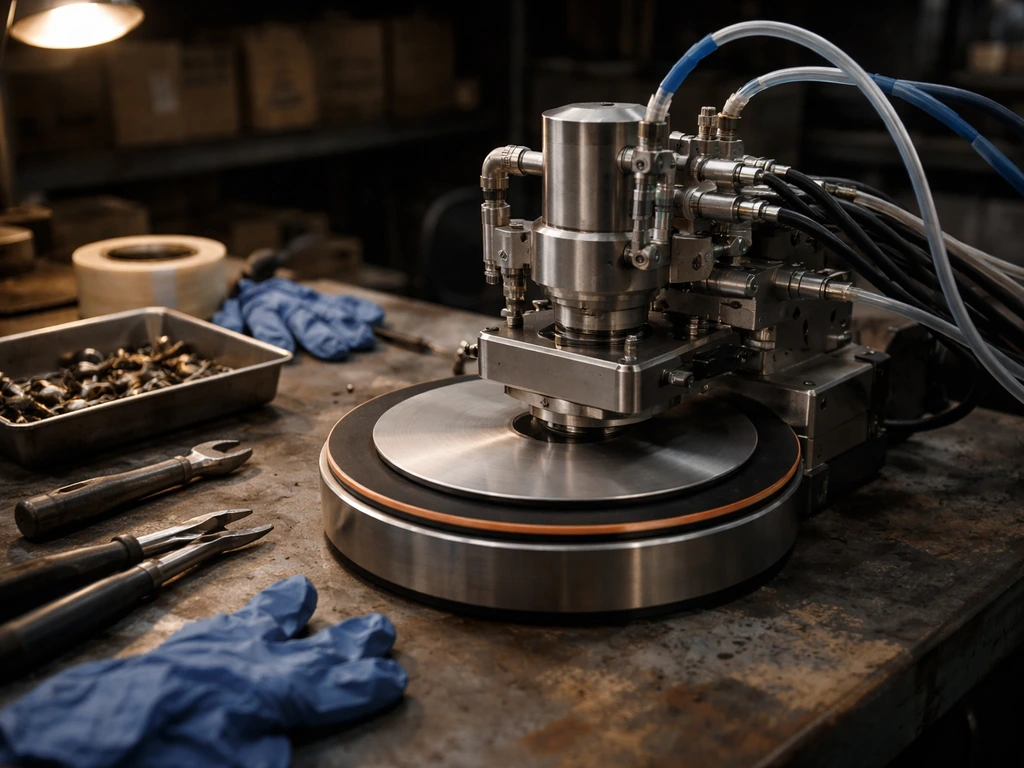
In 1969, Budinger started Rodel, Inc. out of a garage on Hawley Street in Wilmington, Delaware. The company grew into a major supplier of chemical mechanical planarization (CMP) pads and slurries used in semiconductor manufacturing, a niche but critical part of the chip production process. He served as chairman and CEO for over 30 years. Over that period, Rodel became a significant player in a high-value industrial market. The combination of long-tenured ownership, a defensible patent portfolio of more than three dozen patents, and a specialized product in a growing tech-adjacent sector are the primary drivers of his estimated wealth.
Investments and later roles
Post-Rodel, Budinger has been active as an investor through structured vehicles like Hobbit Investments, LLC and Sunnyside Investments, Inc. His appearance in an SEC S-1 filing suggests involvement in at least one company that went through a public offering process or related transaction. He's also listed as a director in Rodel Foundation and Rodel Institute Form 990 filings, which are unpaid governance roles but reflect ongoing organizational responsibility.
Congressional and policy involvement
Budinger has appeared as a named participant in both House and Senate committee reports, identified as 'Inventor, Chairman & Chief Executive Officer, Rodel, Incorporated' in a House report and as 'CEO of Rodel, Inc.' in a Senate Small Business committee context. This kind of policy-level visibility doesn't generate income directly but it confirms his standing as a recognized business figure, which is relevant context for any wealth estimation.
Assets and lifestyle signals
Publicly documented asset signals for Bill Budinger include the following:
- Investment holding companies: The Hobbit Investments, LLC (99% owned by his revocable trust) and Sunnyside Investments, Inc. (where he serves as president) indicate a structured, professionally managed asset base — not a simple savings account.
- A revocable trust: The 'William M. Budinger Revocable Trust' holding his investment LLC is a standard estate-planning structure used by individuals with significant assets to manage distribution, tax planning, and succession.
- Patent portfolio: More than three dozen patents represent intellectual property assets. Whether these are still generating royalty income in 2026 isn't clear from public records, but they represent real IP value accumulated over his career.
- Nonprofit board memberships: Board seats at institutions like the Brookings Institution's Governance Studies program, Aspen Institute Executive Committee, Third Way, and The Breakthrough Institute are typically held by individuals with both the financial capacity to make meaningful donations and the professional credibility to contribute substantively.
- Rodel Foundation: As founding director, Budinger has been the driving organizational force behind a Delaware-focused K-12 education, civic engagement, and corporate governance philanthropy. Sustaining a private foundation over many years implies underlying personal wealth.
There are no publicly documented real estate transactions, yacht purchases, or other high-profile asset acquisitions tied to Budinger in accessible databases as of April 2026. His public profile is that of an understated entrepreneur-philanthropist rather than a conspicuous wealth displayer, which is consistent with many private-company founders of his generation.
How net worth estimates like this one are built
Wealth estimates for private figures like Budinger are assembled from publicly available signals rather than disclosed figures. Here's what sources like this site typically use, and why numbers vary across websites:
| Source Type | What It Shows | Reliability |
|---|---|---|
| SEC filings (S-1, insider trades) | Equity stakes, investment vehicle ownership, named beneficial owners | High for what's disclosed; incomplete for full picture |
| IRS Form 990 (nonprofits) | Director/officer listings, compensation (if any paid) | High for governance; compensation often $0 for volunteer directors |
| Congressional committee reports | Career title and employer at time of testimony | High for identity confirmation; no financial data |
| Net worth estimate sites (e.g., Benzinga insider tracker) | Share-based estimates only; can show $0 if no current market position | Low for true net worth; useful only for public equity snapshots |
| Patent databases | Number and nature of patents held | High for IP ownership; royalty income not disclosed |
| News archives and business press | Revenue milestones, company sales, executive salaries | Moderate; often incomplete for private companies |
The biggest pitfall with private-company founders is confusing the company's value with personal net worth. Rodel's business value and Budinger's personal take-home from it are not the same thing, especially if equity was held by trusts, reinvested, or transferred over decades. Another common error is treating Benzinga's $0 insider-trades estimate as meaningful. That figure is a share-position snapshot, not a net worth calculation, and it simply reflects no current public equity position being tracked, not that the person has no assets.
Different websites also publish very different numbers because they use different base assumptions, different publication dates, and sometimes confuse multiple people with the same name. That last point is especially relevant for William Budinger, where identity disambiguation is genuinely necessary before trusting any figure you find.
How to verify and refresh this estimate yourself

If you want to check or update this estimate today, here are the most productive places to look and the exact search terms to use:
- SEC EDGAR full-text search (efts.sec.gov): Search 'William M. Budinger' or 'Hobbit Investments' to find any new filings linked to his investment vehicles or equity positions. This is the most reliable source for any public-company stake.
- ProPublica Nonprofit Explorer (projects.propublica.org/nonprofits): Search 'Rodel Foundation' (EIN 861015598) and 'Rodel Institute' to see the latest Form 990 filings. These show director compensation (if any) and organizational financial health, which is a proxy for philanthropic capacity.
- Google search: 'William M. Budinger Rodel net worth' and 'Bill Budinger Rodel Inc. acquisition' — the latter to check whether any sale or equity event involving Rodel generated documented proceeds.
- Delaware Division of Corporations (icis.corp.delaware.gov): Search 'Rodel' and related entity names to track any corporate filings or status changes for Budinger-affiliated entities.
- Patent database (patents.google.com): Search 'William Budinger' to see his active patent portfolio and whether any recent licensing activity is documented.
- Business press archives: Search 'Rodel Inc. sold' or 'Rodel Inc. acquisition' in Google News to check for any historical equity event that would have generated a liquidity event for the founder.
When you're doing this research, always confirm you're looking at William M. Budinger (the Rodel founder from Delaware) rather than William D. Budinger (who appears as a trustee in related filings), the accounting student in Missouri, or other individuals who share the name. Cross-checking multiple identifiers, Wilmington, Delaware; Rodel, Inc.; Rodel Foundation; and the Hobbit Investments trust structure, is the fastest way to confirm you've found the right person in any database. Justia's patent entry for application 20110312182 provides a concrete example of a CMP-related patent document that you can cross-check in USPTO or Google Patents for inventor attribution to the relevant Budinger.
As of April 2026, the most credible range for Bill Budinger's net worth remains $10 million to $50 million based on the public evidence available. That estimate should be revisited if new SEC filings, a company transaction, or a large philanthropic gift (which can sometimes be inferred from foundation financial disclosures) surfaces in any of the sources above.
FAQ
Why do some websites list wildly different numbers for William Budinger net worth even when they seem to use the same name?
Most differences come from two issues, identity mix-ups (for example, William D. Budinger versus William M. Budinger) and base assumptions (some estimates treat company value as personal wealth). Even when the same person is targeted, estimates can shift depending on what year the calculation is anchored to.
Does Bill Budinger’s net worth depend on Rodel’s market value, or is it mainly tied to his salary and dividends?
For private-company founders, it is usually driven more by long-term equity ownership and liquidity events than by ongoing salary. Unless you have evidence of a buyout, IPO-related conversion, or a major secondary sale, revenue and salary alone rarely explain a multi-decade wealth buildup.
How can I tell whether a figure is confusing Rodel’s value with Bill Budinger’s personal assets?
Look for wording like “net worth equals company value” or references to enterprise valuation without a personal ownership percentage. A more defensible estimate will discuss personal stake dilution, trust holdings, and equity transfers, not just the business’s implied worth.
What does it mean when an estimate says there is no current equity position, does that imply no assets?
Not necessarily. Absence of observable insider-trade snapshots often means the person’s holdings are not actively reported in the public tracking method, or equity is held indirectly (through trusts, funds, or private vehicles). It can still coexist with substantial non-public assets.
Could Bill Budinger’s net worth be higher if Rodel had an exit, but there is no clear public record of it?
Yes, but you would want corroboration such as later SEC filings mentioning a transaction, founder-related investor disclosures, or foundation records implying a sudden increase in resources. Without that kind of confirmation, higher claims are speculative.
Could his net worth be lower than the $10 million to $50 million range?
Yes, if significant wealth was transferred to trusts, estate structures, or philanthropic entities over time, reducing personal ownership even though the business success remains real. Foundation involvement alone does not prove large transfers, but it can be a clue when combined with financial disclosures.
Is Hobbit Investments, LLC or Sunnyside Investments, Inc. proof of a certain net worth?
No, vehicle names and participation signals do not automatically translate into a specific personal dollar amount. They are more useful for confirming involvement in investing activities and potential asset classes, while actual value depends on what those entities hold.
How do I verify I’m looking at the correct William Budinger in SEC or other databases?
Cross-check multiple identifiers together, not just the name. Use combinations like Wilmington, Delaware; Rodel, Inc.; Rodel Foundation; and connections to Hobbit Investments. Also check for William M. Budinger versus William D. Budinger to avoid father-son or trustee name collisions.
Does philanthropy or foundation governance typically increase or decrease net worth estimates?
It usually decreases personal net worth if it reflects funded gifts, but governance roles by themselves do not. To adjust an estimate downward, you would look for evidence of funded donations or measurable foundation resource spikes tied to his period of giving.
What’s the fastest way to update the net worth range if new information appears?
Monitor new SEC filings that mention Rodel, investment vehicles tied to him, or transaction language suggesting liquidity. Also re-check foundation Form 990 information for large changes in distributions and note whether those changes are consistent with a personal wealth event.
Next Articles
Bonz Hart Net Worth Estimate Breakdown and Update
Bonz Hart net worth estimate with breakdown, latest data dates, methods, and factors that could raise or lower it.

Budi Hartono Net Worth: Estimate, Sources, and How It’s Calculated
Budi Hartono net worth estimate range, how it’s calculated from holdings, and what updates could change it
Bill Budinger Net Worth: Estimate, Sources, and How to Verify
Bill Budinger net worth estimate breakdown, income sources, and a checklist to verify claims from public records.