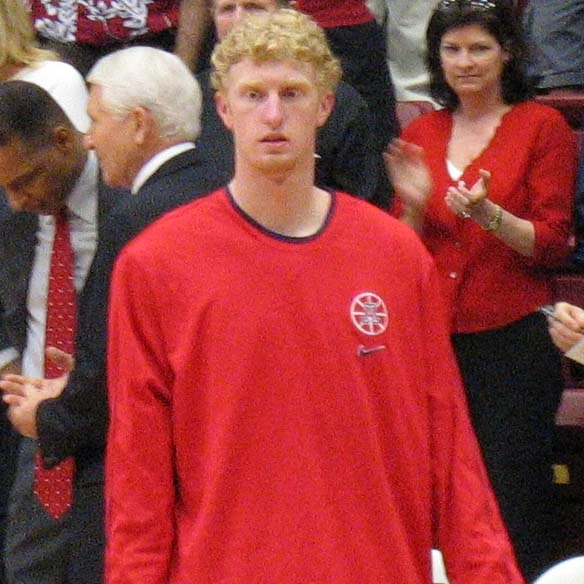
Who is Chase Budinger (and why people are searching his net worth)

Chase Budinger is a former NBA player turned professional beach volleyball athlete, and his financial story is genuinely unusual enough to make people curious. Basketball-Reference also lists Budinger making blank" rel="noopener noreferrer">$5,000,000 in 2014 in its NBA salary and earnings line items. Born and raised in Encinitas, California, he was drafted by the Houston Rockets in the second round (44th pick overall) of the 2009 NBA Draft. He spent seven seasons in the NBA playing for multiple teams, most notably signing blank" rel="noopener noreferrer">a three-year, $16 million deal with the Minnesota Timberwolves in 2013. Then, rather than grinding through the twilight of a basketball career, he walked away from the hardwood and became a pro beach volleyball player on the AVP Tour, starting his rookie season in 2018 and earning AVP Rookie of the Year and Most Improved Player honors that same year. He went on to win AVP titles in 2019 and 2021 with partner Casey Patterson, and by 2024, at age 36, he was competing on the Olympic beach volleyball stage. That combination of NBA money, athletic longevity, and a highly visible career pivot makes him a legitimate subject for net worth curiosity.
It is also worth noting that AVP frames Budinger as the only NBA-to-AVP transition in the history of the sport, which has given him a distinctive public profile beyond pure athletic performance. He has appeared in mainstream media coverage from outlets like The Guardian, the Washington Post, and TMZ Sports, and he has a presence on sponsorship platforms like OpenSponsorship. All of that visibility is exactly why people search his name alongside "net worth" and why it is worth digging into what the evidence actually supports.
What "net worth" actually means in this context
Net worth is the simplest financial concept in the world: total assets minus total liabilities. For a public figure like Budinger, assets typically include cash and savings, investment accounts, real estate, equity in any businesses, and the market value of any other holdings. Liabilities are debts: mortgages, loans, and anything else owed. The resulting number is a snapshot, not a salary, and it can change significantly based on investment performance, spending habits, and career earnings over time.
When you read a net worth estimate for an athlete on a reference site, you are almost never looking at a verified balance sheet. Private individuals, even famous ones, are not required to disclose their finances. What estimators do instead is work from known income signals: publicly reported contracts, prize money, endorsement deals, appearance fees, and media income. Then they apply assumptions about taxes, spending, and investment returns. That is why every estimate on a site like this one is explicitly an approximation, not a certified figure. Understanding that going in makes the numbers far more useful.
What the sources are actually saying: the estimated range

Here is where things get messy with Budinger specifically. The public estimates vary so wildly that the range itself tells you something important about how unreliable unverified net worth sites can be. The Guardian, in a July 2024 piece about his Olympic beach volleyball journey, states plainly that Budinger made $18 million in the NBA. That is the most credible single data point available, sourced from a major editorial outlet with a history of fact-checking sports finance reporting. It gives you a concrete earnings floor to work from.
From there, the third-party net worth estimates split dramatically. One site, Moonchildren Films, places his net worth at $40 million, citing career earnings and endorsements, but provides no transparent methodology or primary financial documentation. On the opposite end, CelebsMoney pegs his net worth at $100,000 to $1 million as of 2025, framing him simply as a basketball player with no acknowledgment of his volleyball career or post-basketball income. PeopleAi lands in between with a more granular (though still unverified) estimate of $1.61 million as of August 2025, showing a year-by-year series going back to $1.29 million in 2023.
| Source | Estimate | Notes |
|---|
| The Guardian (2024) | $18M NBA career earnings | Credible editorial outlet; earnings figure, not net worth |
| Moonchildren Films | $40 million net worth | No transparent methodology; likely inflated |
| PeopleAi (Aug 2025) | $1.61 million net worth | Year-by-year series; unverified methodology |
| CelebsMoney (2025) | $100K–$1M net worth | Appears to ignore volleyball/post-NBA income entirely |
Given all of this, the most defensible estimate for Chase Budinger's net worth as of April 2026 is somewhere in the range of $5 million to $15 million. The $18 million in NBA earnings is the anchor, but taxes, spending over a 15-plus-year career, and the relatively modest prize money in professional beach volleyball mean the full $18M likely was not preserved in full. At the same time, his continued sponsorship activity, media visibility, and endorsement history suggest his post-NBA net worth is well above the low-end guesses circulating on some aggregator sites.
Where his money actually comes from
NBA contract earnings

The biggest single income source in Budinger's career is his NBA salary history. The $16 million, three-year deal with the Minnesota Timberwolves signed in 2013 was widely reported by CBS Sports and Yahoo Sports at the time, and The Guardian's $18 million total NBA career figure aligns closely with that contract plus earlier deals on rookie and short-term contracts. Seven NBA seasons is a long enough career to accumulate meaningful wealth, particularly when one of those seasons comes with an eight-figure contract. After taxes, agent fees, and the cost of living as a professional athlete, a realistic post-NBA savings figure from basketball alone might be in the $8–12 million range, depending heavily on spending and investment decisions made during that period.
Beach volleyball prize money and tour income
Beach volleyball prize money is not NBA-level income. AVP tournament purses are substantially smaller than professional basketball salaries. Winning an AVP title, as Budinger did in Hermosa Beach in 2019 and again in 2021, brings recognition and ranking points but not life-changing prize checks. His Olympic participation in 2024 adds some prestige and potentially prize-adjacent income, but beach volleyball remains a sport where the top earners make a fraction of what mid-level NBA players earn. In practical net worth terms, his volleyball career is more about maintaining relevance and sponsorship appeal than generating primary wealth.
Sponsorships and brand deals are likely the most underreported piece of Budinger's post-NBA financial picture. His presence on platforms like OpenSponsorship signals that he has active brand association data and that companies are aware of him as an endorsement vehicle. Athletes with his profile, a major professional sports background combined with an ongoing athletic career and mainstream media presence, typically attract mid-tier endorsement deals covering apparel, sports equipment, nutrition brands, and lifestyle products. Exact contract values are not public, but this revenue stream is real and ongoing.
Budinger's media footprint has grown alongside his volleyball career. TMZ Sports covered him competing at a major volleyball event as recently as October 2025, and he has appeared in Washington Post and Guardian features tied to his Olympic journey. His IMDbPro profile lists "Self" credits from media appearances, which can translate into appearance fees, speaking engagements, and brand partnership opportunities. None of these are primary wealth drivers, but they collectively contribute to a sustained income stream that keeps his net worth from declining steeply after his basketball earnings stopped.
Why the estimates vary so much
The spread between $100,000 and $40 million for the same person's net worth is not just sloppy research. It reflects several structural problems with how net worth estimates get produced and distributed online.
- Timing: A site that last updated Budinger's profile in 2016, when he was still in the NBA, would use very different inputs than one updated in 2024 after his Olympic run. Net worth is a snapshot, and stale snapshots get recycled without updates.
- What gets counted: Some sites count only verified contract income. Others try to include endorsement estimates. Others ignore post-primary-career income entirely. CelebsMoney appears to treat Budinger only as a basketball player, ignoring his volleyball and media work.
- Identity confusion: One search result during this research surfaced a completely different person (Chase Bricker from the World Poker Tour). This kind of identity mixing is common on low-quality aggregator sites and can corrupt a profile's numbers entirely.
- Methodology opacity: A site claiming a $40 million figure with no primary sources, no contract data, and no explanation of calculations is essentially guessing with confidence. That number should be treated skeptically.
- Tax and spending assumptions: Even from the same gross earnings figure, two estimators using different tax rates or lifestyle spending assumptions can arrive at wildly different net worth figures.
It is also worth noting that the absence of a clearly matching profile on some major reference sites (searches for Budinger on certain domains return unrelated results) suggests his profile is not as thoroughly indexed as more mainstream celebrities. That gap in coverage makes the estimates that do exist less reliable because there are fewer cross-checks pulling them toward accuracy.
How to verify or update the number yourself

If you want to build your own sanity-check on Budinger's net worth, here is a practical sequence to follow. Start with the known earnings anchor: The Guardian's $18 million NBA career figure is the most credible public data point and should serve as your baseline. From there, apply a rough tax-and-living reduction. Professional athletes in the U.S. typically face effective federal tax rates of 35–37% on their NBA income, plus state taxes. Even with conservative spending assumptions, arriving at $8–12 million in post-NBA savings is reasonable.
- Confirm the NBA earnings base: Cross-reference contract reporting from CBS Sports, Yahoo Sports, and Basketball Reference to reconstruct his year-by-year salary history. The 2013 Timberwolves deal ($16M over three years) is the biggest single line item.
- Check StatMuse or Basketball Reference for his active seasons: Knowing exactly which seasons he played (and on what contracts) fills in the earnings picture before his major deal.
- Search AVP's event database for his tournament results: This helps you understand his prize money exposure post-2018, which is real but modest relative to NBA income.
- Look at OpenSponsorship or similar platforms for sponsorship signals: You won't get contract values, but you can see which brands have expressed interest or partnership history.
- Check IMDbPro for media credits: Appearance credits indicate appearance fee income, though amounts are not disclosed publicly.
- Google his name alongside specific brand names or "endorsement" to surface any disclosed partnership announcements: Press releases from brands sometimes include deal context.
- Cross-check any net worth figure you find against the $18M earnings anchor: Any estimate below $3M or above $20M should be treated with serious skepticism unless new financial evidence explains the gap.
One important verification habit: always confirm you are reading about the right person before accepting any financial data. As noted above, search results for "Chase" net worth can surface unrelated individuals. Confirm the profile matches Budinger's NBA draft year (2009, round 2, pick 44), his hometown (Encinitas, CA), and his volleyball career start date (2018) before trusting any numbers on a given page.
Putting his wealth in context
Budinger's financial story is a good reminder that net worth is not just about peak earnings. It is about what you do with earnings over time. An athlete who made $18 million in basketball but invested wisely, kept lifestyle costs in check, and built post-career income streams through sponsorships and media can retain and grow that base substantially. One who spent freely and relied entirely on salary income without diversifying could arrive at a much lower number despite the same gross career earnings.
His trajectory has some structural similarities to other athlete-entrepreneurs whose post-career wealth depends heavily on brand equity rather than contract dollars. For comparison, looking at how wealth accumulates across different athletic career paths can be instructive. The estimated net worth of Otto Budig, for instance, illustrates how different career structures produce very different wealth outcomes over time. And for readers who are curious about how the Budinger surname connects to other notable financial profiles, the Bill Budinger net worth profile and William Budinger net worth page offer related reference points, though those are distinct individuals with separate wealth trajectories.
For a broader sense of how athletes build wealth across very different industries and geographies, profiles like the Robert Budi Hartono net worth estimate and the Budi Hartono net worth breakdown show how business and investment diversification can amplify earnings far beyond the original income source. On a smaller scale, profiles like Bonz Hart net worth show how entertainment and media figures build wealth through a mix of creative work and brand positioning, which is not entirely unlike the post-NBA path Budinger has been on since 2018.
The bottom line on Chase Budinger's net worth as of April 2026: the most credible range, built from the $18 million in documented NBA earnings and adjusted for realistic post-career income and expenses, is approximately $5 million to $15 million. The $40 million figure circulating on some sites lacks any verifiable basis. The sub-$1 million estimates ignore his career history almost entirely. Neither extreme is reliable. The middle range, grounded in known contract data and reasonable assumptions about post-NBA wealth management, is where the evidence actually points.