
John VanBiesbrouck's net worth is most reasonably estimated in the range of $10 million to $15 million as of April 2026. That figure accounts for NHL career earnings across more than two decades, post-playing executive income, and ownership stakes in junior hockey franchises. The wide gap you'll see across aggregator sites, anywhere from $2.5 million to over $22 million, reflects how differently these sites handle career salary data, and why it's worth understanding the methodology before trusting any single number.
John VanBiesbrouck Net Worth: How to Estimate It With Sources

Marcus Voss
26 Apr 2026
Who John VanBiesbrouck is and why people search his wealth

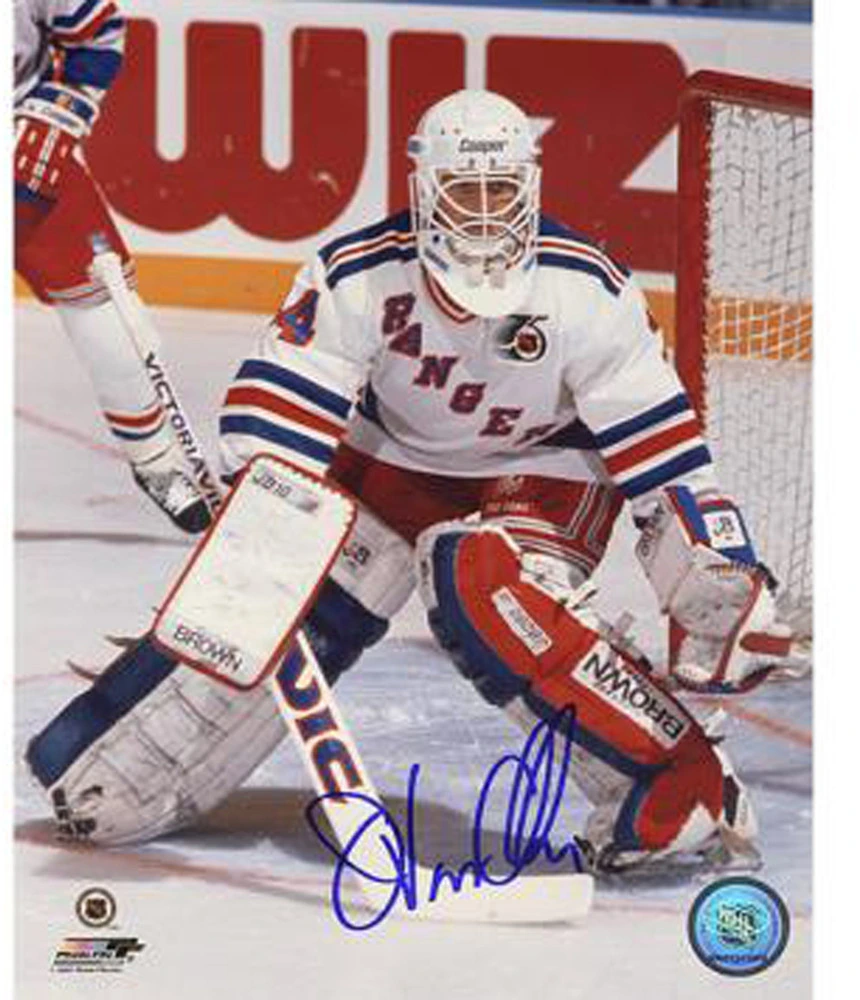
John VanBiesbrouck (born September 4, 1963, in Detroit, Michigan) is one of the most accomplished American-born goaltenders in NHL history. Nicknamed 'The Beezer' and 'JVB,' he played professionally from 1981 to 2002 with five different franchises: the New York Rangers, Florida Panthers, Philadelphia Flyers, New York Islanders, and New Jersey Devils. He won the Vezina Trophy in 1986 with the Rangers and was inducted into the United States Hockey Hall of Fame in 2007. Since retiring as a player, he has built a second career in hockey management, serving as Assistant Executive Director of Hockey Operations at USA Hockey and playing key roles in the Muskegon Lumberjacks organization and U.S. Olympic team management. His long career, hall-of-fame status, and continued presence in the sport make him a recognizable name, which is exactly why people go looking for his financial profile.
What 'net worth' actually means here
Net worth is total assets minus total liabilities. For a public figure like VanBiesbrouck, those assets can include cash and investments, real estate holdings, business ownership interests, retirement accounts, and any deferred income. Liabilities are debts: mortgages, loans, and other obligations. What you can't verify without a court filing or financial disclosure is most of this. No public record shows VanBiesbrouck's brokerage accounts, mortgage balances, or personal savings. What we do have are verified salary figures from nonprofit tax filings, known career salary data, and documented business investments. Everything else is an estimate built from those anchors.
How to research his net worth yourself

The most reliable starting point is ProPublica's Nonprofit Explorer, which publishes Form 990 filings from USA Hockey. These are public records. They show VanBiesbrouck earned $229,257 in reportable compensation for fiscal year ending August 2021, $221,901 for fiscal year 2022, and $254,328 in the most recent available disclosure (fiscal year ending August 2024). Those are real, audited numbers. From there, you can supplement with historical NHL salary databases, which are widely archived online for the 1990s and 2000s. Wikipedia's career summary, ESPN's player profile, and USA Hockey's staff directory all confirm his identity and current role. For cross-referencing net worth estimates, sites like NetWorthList.org and HockeyZonePlus publish figures, but their methodologies are opaque and should be treated as rough starting points rather than facts.
Career and income sources that built his wealth
VanBiesbrouck's earning power has come from several distinct phases. His NHL playing career ran 21 years, covering an era when goaltender salaries climbed significantly through the 1990s. By the mid-to-late 1990s, top NHL goaltenders were earning between $2 million and $5 million annually. Even conservative estimates of his career earnings place total NHL compensation in the range of $15 million to $20 million before taxes and agent fees. After retirement, he moved into management: serving as GM and part owner of the Muskegon Lumberjacks (USHL) in 2013, previously owning a 25% stake in the Sault Ste. Marie Greyhounds (OHL) before selling that stake around 2001, and taking on his current role at USA Hockey where his salary is publicly documented in the $220,000 to $255,000 range annually. He was also named general manager of the 2022 U.S. Olympic Men's Ice Hockey Team, though a subsequent announcement noted that Stan Bowman handled the formal GM duties. These roles add steady professional income on top of whatever investment and real estate assets he's accumulated.
Assets and investments worth factoring in
Specific real estate holdings for VanBiesbrouck are not documented in public records that are easily accessible, but it's reasonable to consider the categories that typically apply to retired professional athletes in his income bracket. NHL players of his era commonly held residential real estate in multiple cities where they played, and some retained those properties as rentals or investment assets. His ownership stakes in junior hockey organizations (the Greyhounds and Lumberjacks) represent business investments, though the Greyhounds stake was sold and the financial return from either franchise isn't documented publicly. At his current USA Hockey salary level (roughly $250,000 per year), he also continues to accumulate income that, invested consistently over the past decade-plus, would compound meaningfully. None of this is verifiable to a precise dollar figure without private financial records, but these are the categories worth weighting when building an estimate.
A timeline of how his wealth likely accumulated
| Period | Role / Activity | Estimated Wealth Impact |
|---|---|---|
| 1981–1989 | Early NHL career (Rangers, developing seasons) | Moderate salary growth; base earnings likely $100K–$500K/year |
| 1990–1999 | Peak playing years (Rangers, Florida Panthers) | Salaries rising into $1M–$4M/year range; estimated peak earnings phase |
| 1999–2002 | Late career (Flyers, Islanders, Devils) | Declining role but continued NHL compensation; OHL ownership stake |
| 2001 | Sold Sault Ste. Marie Greyhounds (25% stake) | One-time liquidity event; amount not publicly disclosed |
| 2002–2012 | Post-playing transition (coaching, scouting roles) | Lower income phase; asset management and investment returns |
| 2013 | GM and part-owner, Muskegon Lumberjacks | Business ownership; USHL franchise value relatively modest |
| 2013–Present | Assistant Executive Director, USA Hockey | $220K–$255K/year in documented compensation; steady accumulation |
Why different sites show wildly different numbers
This is one of the most common frustrations people run into when researching public figure net worth. NetWorthList.org pegs VanBiesbrouck at $2.5 million, which seems to dramatically undercount his NHL career earnings. HockeyZonePlus shows $22,117,613, which appears to be a raw career salary total rather than a net worth figure after taxes, agent fees, living expenses, and liabilities. Neither is wrong in isolation; they're just answering different questions. Raw career earnings and net worth are not the same thing. A player who earned $18 million gross over his career might have $6 million in net worth today after federal and state taxes (which can run 40–50% for high earners), agent commissions (typically 3–5%), lifestyle costs across two decades, and any business losses. This is why a mid-range estimate of $10 million to $15 million is more grounded than either extreme. It accounts for the fact that substantial money was earned and some of it was retained and grown, without treating every pre-tax dollar as current net worth.
The evidence-based estimate and confidence level
Pulling all of this together: VanBiesbrouck had a 21-year NHL career with peak earnings likely in the $2 million to $4 million per year range during his best seasons in the 1990s. His documented post-career income from USA Hockey averages around $235,000 per year over the past several years. He has held ownership stakes in two junior hockey franchises, with at least one sold (the Greyhounds share). Given typical tax burdens, career spending, and the compounding effect of investments made from a high-income athlete's career, a net worth in the $10 million to $15 million range as of April 2026 is the most defensible estimate. Confidence is moderate, not high, because no personal financial disclosures exist. If you're updating this figure, the USA Hockey Form 990 filings (available on ProPublica) are the best annual data point to track, since they provide verified current compensation. For context, this kind of career arc and wealth trajectory is fairly common among Hall of Fame-caliber players from his era, and is worth comparing against similar profiles of hockey executives and former players who transitioned into management roles. If you are specifically searching paata burchuladze net worth, use the same evidence-based approach based on verified compensation records and documented investments. Because some readers compare profiles, you can also look at how Travis Bajema net worth estimates are built from documented compensation and investments, not guesses. If you were specifically searching for Peter Burchhardt net worth, the same evidence-based approach applies, but you would need to verify his separate income and asset sources. If you are also looking up Robert Burch net worth, the key is to rely on verifiable compensation records and documented investments rather than aggregator totals.
FAQ
Why can’t I get a single exact number for John VanBiesbrouck net worth, even with many websites listing figures?
Treat net worth estimates as a snapshot, not a lifetime total. For an executive like VanBiesbrouck, you should update your figure annually using the latest USA Hockey Form 990 compensation disclosures, then rerun the model with an assumed savings and investment rate (since we do not have his personal brokerage or real estate details).
How can I tell whether a “net worth” figure is actually just career salary or something else?
Yes, if you use the aggregator number as a check rather than a conclusion. When a site reports something that looks like gross career salary, compare it to documented compensation, especially the USA Hockey reportable compensation range (roughly low-to-mid $200k in recent years). If the number cannot be reconciled with gross earnings plus plausible retention, it is likely not net worth.
What is the most practical way to build an estimate when asset details are missing?
Start by separating “income anchors” from “asset anchors.” Income anchors you can verify are NHL-era salaries (via archived databases) and USA Hockey Form 990 compensation. Asset anchors you likely cannot verify publicly are brokerage balances, mortgage payoffs, and specific properties, so you should rely on categories (investments, retirement accounts, business stakes) rather than pretending those categories are known dollar amounts.
If I want to improve the estimate, what should I adjust first, taxes, lifestyle spending, or investment growth?
Be cautious about taxes and agent fees, but also avoid double-counting. The article’s modeling idea treats raw earnings and net worth as different buckets, where your assumptions should account for taxes and commissions once, then add an assumed net retention rate and investment compounding for the years after peak salary.
How should I incorporate his junior hockey ownership stakes into a net worth model?
Use a conservative range approach. For example, if you build from $220k to $255k annual USA Hockey compensation, apply a reasonable savings and investing share and a modest return assumption for 10-plus years, then add whatever you assume from any prior franchise ownership proceeds. Without verified franchise sale proceeds and property values, that final “add-on” should be capped rather than assumed large.
When updating John VanBiesbrouck net worth, should I use calendar-year income or fiscal-year income?
Check fiscal-year timing and role changes. USA Hockey Form 990 reports are based on the organization’s fiscal year ending date (for example, August 2021, August 2022, and August 2024 in the article). If you compare those to NHL seasons or calendar years, align periods so you do not mistakenly treat salary totals as overlapping.
Why do some estimates look extremely high or low compared with the article’s $10 million to $15 million range?
Yes, and it can be misleading. A number may look “too high” if it includes unrealized business value, and it may look “too low” if it ignores investment and retirement accounts. Your best control is to explain the estimate as “cash-and-investments plus value of business stakes minus known or assumed liabilities,” even if you cannot verify the liability side.
What does it mean if an estimate changes dramatically year to year across websites?
If you see a sharp step-change after a certain year, investigate whether the site is switching methodologies, not whether his wealth suddenly changed. For example, a platform might move from career earnings totals to a claims-based asset model, or it might incorporate a later job title, both of which can change the output without new verifiable disclosures.
What are the most common research mistakes people make when estimating John VanBiesbrouck net worth?
Common mistake: using gross career earnings as current net worth. Another mistake is ignoring that Form 990 compensation is only one component of total income, while net worth depends on retained earnings, investment performance, spending patterns, and liabilities that are not disclosed.
Next Articles

Peter Burchhardt Net Worth: How It’s Estimated and Verified
Evidence based guide to estimating Peter Burchhardt net worth, verifying identity and income, assets, liabilities, and r

Steven Bancarz Net Worth: Estimate, Income Sources, and How to Verify
Steven Bancarz net worth estimate explained with income sources, wealth signals to verify, and accuracy limits.

Steven Basalari Net Worth Estimate Explained and Verified
Steven Basalari net worth estimate with verified sources, defensible range, and a checklist to confirm updates.