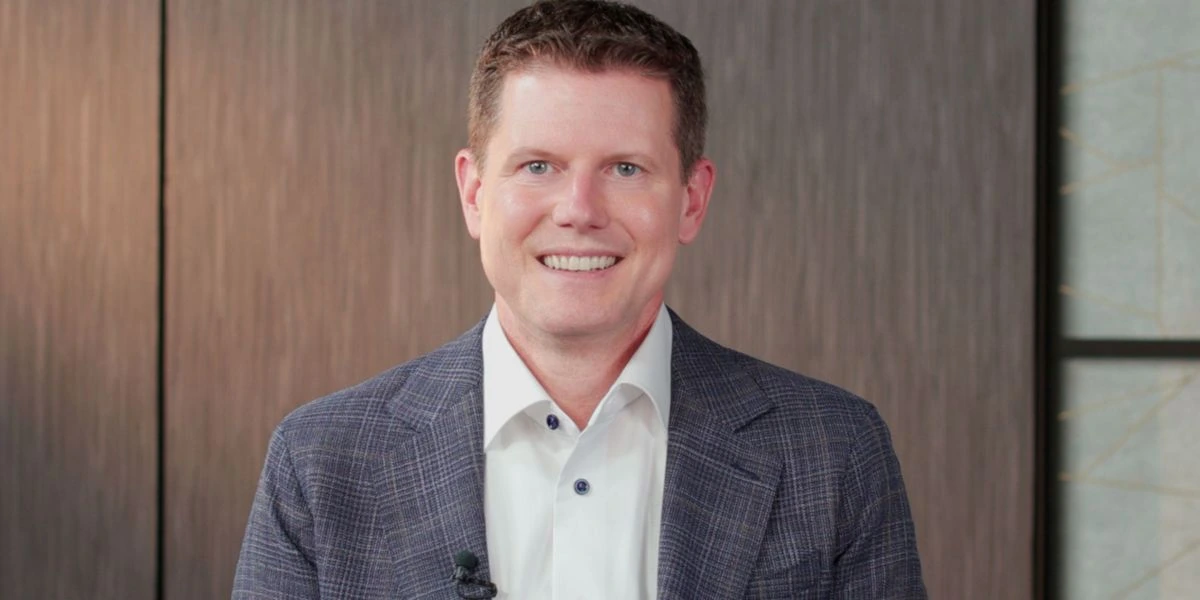
Which Wayne Berson are we talking about?
The Wayne Berson most people are searching for is Wayne Berson, Chief Executive Officer of BDO USA and Global Board Chairman of BDO International Limited. His professional footprint is well-documented: he has been featured in the Journal of Accountancy, Accounting Today, CFO Brew, the Washington Business Journal, and BDO's own published governance filings. He is based in the Potomac, Maryland area (with professional addresses also linked to McLean, Virginia), and has led BDO USA since November 1, 2012.
A May 2025 press release confirmed he will retire effective June 30, 2026. If you found this page searching for a different Wayne Berson, such as an academic, local business figure, or someone outside the accounting industry, this article will not be relevant to you. Everything below is specific to the BDO executive.
The short answer on net worth

Wayne Berson's net worth is estimated at $15 million to $30 million, with $20 million being a reasonable midpoint for 2025 and early 2026. That range is not a verified disclosure. BDO USA is a private firm and does not file executive compensation with the SEC. No credible primary source (tax filing, court record, or verified interview) has publicly confirmed a specific personal net worth figure. One third-party aggregator (ceonetworths.com, updated March 2025) pegs the number at approximately $20 million, which lands inside the range but comes with no published methodology. Treat the range as a well-reasoned estimate, not a confirmed balance sheet.
How his career built this wealth
Berson joined BDO before its current form and worked his way through audit and assurance roles, eventually becoming the Atlantic Assurance Regional Managing Principal and then Chairman of the BDO USA Board of Directors from 2010 to 2012. He was named CEO-elect in early 2012 and formally took the helm on November 1, 2012, when the firm was generating roughly $618 million in annual revenue. By the time of his planned 2026 retirement, BDO USA had grown to approximately $3 billion in annual revenue, a nearly 400% increase during his tenure. That scale matters enormously for understanding compensation: a firm growing from $618 million to $3 billion over 13 years creates a progressively larger executive compensation pool.
For comparison, it is worth noting that executive compensation structures at large private professional services firms often include a base salary, performance bonuses, and partner/equity distributions rather than the stock-based compensation that dominates public company executive pay. Berson's parallel role as Global Board Chairman of BDO International Limited also signals a governance-level engagement that typically carries additional compensation or benefits from the international network. Think of people like Jason Buechel, whose financial profile reflects how leadership of a large private organization can generate significant wealth over time even without public equity grants.
On top of direct compensation, Berson has been named to Accounting Today's list of the top 100 most influential people in accounting every year since 2013 and was listed among Washington D.C.'s 100 most powerful business leaders in 2012 and 2013. These recognitions are not income sources, but they are markers of the seniority level that commands top-tier pay in the professional services world.
Assets, ownership stakes, and wealth indicators

The most significant and unusual wealth-related development in Berson's tenure was BDO USA's structural transformation from a partnership to a corporation and its conversion to an ESOP (Employee Stock Ownership Plan) model, funded by a $1.3 billion credit facility provided by Apollo Global Management. Berson was publicly quoted on the strategic rationale, describing the ESOP as an alternative to private equity. Under ESOP structures, senior leadership often holds meaningful equity stakes that are valued annually by a trustee-overseen process. Whether Berson holds ESOP units, at what valuation, and on what vesting schedule are not publicly disclosed.
A federal complaint filed in January 2025 (Taylor v. BDO USA, P. C. et al.
) names Berson as CEO and Chairman and references ESOP fiduciary administration context, confirming the ESOP's legal and operational relevance to his role.
Court filings are public documents and can be a useful, if indirect, window into corporate structures that affect executive wealth. A January 2025 Reddit thread in r/Accounting also discussed the ESOP class action timing and implications, including observations about executives and leadership roles tied to ESOP governance.
Outside of the ESOP, real estate holdings in the Maryland and Virginia metro area are a plausible component of personal wealth given Berson's long career in those markets, though no specific property records have surfaced in publicly available research.
Why the estimate is uncertain
Several factors make a precise figure genuinely difficult to pin down. First, BDO USA is private. Unlike a publicly traded company, it has no obligation to file proxy statements disclosing executive pay with the SEC. Second, the partnership-to-ESOP conversion is relatively recent, which means equity valuations are still maturing and likely not reflected in any public document. Third, the ESOP structure itself involves trustee-held shares on behalf of employees, and the specifics of how top executives participate (versus rank-and-file employees) are determined by plan documents that are not routinely public. Fourth, most third-party net-worth sites that cite figures for executives like Berson use income-based estimates rather than direct asset verification, introducing wide error margins.
This same challenge exists for many executives at large private firms. If you have researched the finances of other prominent figures in professional services or publishing, like Bart Ehrman or Erik Buell, you will recognize the pattern: when there are no SEC filings, no IPO prospectus, and no confirmed real estate records in the public domain, the range of plausible estimates widens considerably.
How the estimate was calculated

The $15M to $30M range was built from the bottom up using four inputs, each with a different confidence level.
| Input | Estimated Value | Confidence |
|---|
| Cumulative compensation (2012–2025, 13 years at CEO-level pay at a $1B–$3B firm) | $8M–$16M after taxes and living expenses | Moderate |
| ESOP equity participation (unknown stake; included at conservative estimate) | $3M–$8M | Low |
| Real estate and liquid personal assets (inferred from location and career duration) | $2M–$5M | Low |
| Third-party aggregator midpoint (ceonetworths.com, March 2025) | $20M | Very Low (no methodology) |
The compensation input is the strongest. Large accounting firm CEOs at firms with $1 billion or more in revenue typically earn total compensation in the range of $1 million to $3 million annually, depending on firm performance and seniority. Over 13 years, even after taxes and personal spending, accumulated savings and investments from that income alone could reasonably produce the low end of the range. The ESOP and real estate inputs are speculative but directionally sensible.
The third-party site figure at $20 million is consistent with this model but cannot be independently verified, so it is used as a reference point rather than a foundation. For context on how similar executives' financial profiles are constructed, the methodology used for estimating Jason Berman's net worth follows a comparable bottom-up income approach when primary disclosures are absent.
How to verify or update this number yourself
If you want to refine this estimate, here are the practical steps that will actually move the needle, listed in order of likely usefulness.
- Check federal court filings: PACER (pacer.gov) is the official U.S. federal court record system. Search for 'BDO USA' or 'Wayne Berson' to find filings like the Taylor v. BDO USA case. ESOP-related litigation often surfaces compensation and equity details that companies would not otherwise disclose.
- Search property records: County property databases in Montgomery County, Maryland (where Potomac is located) and Fairfax County, Virginia (McLean) are publicly searchable online. Real estate is often the largest single disclosed asset for executives at private firms.
- Monitor BDO's Transparency Report: BDO publishes an annual Transparency Report as part of its governance disclosures. The 2024 version confirmed Berson's Global Board Chair role. Future reports (or reports from BDO's successor leadership) may include compensation disclosures or structural financial information.
- Track ESOP annual valuations: ESOP-owned companies are required to conduct annual independent valuations. While these are not always public, they are filed with the Department of Labor (Form 5500). Search the DOL's EFAST2 database (efast.dol.gov) for BDO USA's ESOP plan filings.
- Watch for post-retirement disclosures: Executives sometimes disclose wealth or equity positions in connection with board appointments, philanthropy, or regulatory filings after leaving an organization. Berson's retirement in mid-2026 may generate additional coverage.
- Treat aggregator sites with skepticism: Sites that list celebrity or executive net worths without citing Form 5500 filings, property records, or verified interviews are generally reverse-engineering an income estimate. They are useful as a rough sanity check, not as primary sources.
The bottom line is that Wayne Berson is a genuinely high-profile executive who led one of the largest accounting firms in the United States through more than a decade of substantial growth, an ownership structure transformation, and a global governance role. The financial rewards for that kind of tenure at that scale are real and significant. A range of $15 million to $30 million is defensible given public evidence, with $20 million as a reasonable working estimate, but anyone citing a specific figure for a private-firm executive without a primary source is guessing. The most reliable next step is the DOL's ESOP filings database, which may surface more concrete data as the ESOP matures.